How Much Is My Number Plate Worth? A Realistic Guide to Australian Plate Values

How Much Is My Number Plate Worth? A Realistic Guide to Australian Plate Values
It's the question every custom plate owner eventually asks. Maybe you bought your plates years ago and you've heard the market has moved. Maybe you inherited a set from a parent. Maybe you just noticed someone selling a similar plate for a surprising amount and now you're curious.
The honest answer is: it depends. Plate values in Australia range from essentially nothing (a long random combination nobody wants) to millions of dollars (NSW plate "1" sold for $12.4 million in 2024). Most plates fall somewhere between $200 and $10,000 on the secondary market, but the spread is enormous and the factors that drive value aren't always obvious.
This guide explains what actually determines a plate's value, gives you realistic price ranges based on real Australian market data, and shows you how to get a specific estimate for your own plate.
The quick answer: check your plate now
If you just want a number and don't need the full explanation, the fastest way is to use our free valuation tool. Enter your plate combination and state, and get an AI-powered estimate in under 30 seconds based on real Australian sales data.
Check what your plate is worth →
No signup required. If you want to understand why your plate is valued where it is, keep reading.
What makes a number plate valuable?
Plate values aren't random. After analysing hundreds of Australian plate sales, a few clear patterns emerge. Here's what moves the needle, roughly in order of importance.
Character count is the single biggest factor
This is the one rule that holds true across every state, every plate type, and every market condition: shorter plates are worth more. The relationship isn't linear — it's exponential.
As a very rough guide based on Australian market data:
One character (a single digit or letter) — these are the rarest plates in existence. Only one person in each state can own "1" or "A." Prices range from $275,000 (SA plate "1") to $12.4 million (NSW plate "1"). Most single-character plates, if they ever come to market, trade in the six-figure range.
Two characters — still extremely rare and highly sought after. Combinations like "1A," "88," or "VB" carry both brevity and meaning. Typical range is $20,000 to $300,000 depending on the combination and state.
Three characters — the sweet spot for collectors. Short enough to be exclusive, long enough that recognisable words and numbers exist. Heritage three-digit plates in VIC regularly sell for $10,000 to $80,000. Word plates like "ACE" or "MAX" can reach similar levels.
Four characters — this is where the broader market lives. Common names, car references, and meaningful number combinations are the most sought after. Range is typically $1,000 to $15,000 for desirable combinations, though outliers exist.
Five characters — values drop significantly here. Only combinations that spell clear, desirable words maintain strong value. Most five-character plates trade in the $500 to $3,000 range.
Six or more characters — the hardest to sell. Unless the combination spells something particularly clever or memorable, expect $200 to $1,000. Many six-character plates struggle to find buyers at any price on the secondary market.
These ranges are indicative, not definitive. A six-character plate spelling "DOCTOR" will be worth more than a random three-character plate like "7KQ." But as a general rule, character count sets the ceiling.
Words and names command a premium
A plate that spells a recognisable word or common name is worth significantly more than a random string of the same length. "BOSS" will always outsell "BXQT" — even though they're both four characters.
The most valuable word plates tend to be common first names (especially short ones like "MAX," "SAM," "BEN"), status words ("KING," "BOSS," "ACE," "VIP"), car culture references ("GTR," "AMG," "HSV," "M3," "V8"), and profession titles ("DOC," "CHEF," "TRADIE").
Names are interesting because their value is partly driven by how common the name is. "CHRIS" has more potential buyers than "XAVIER" simply because more people are called Chris. But rarer names can command premiums from the right buyer who's been searching for years.
Numbers carry cultural weight
Certain number combinations are highly sought after for cultural reasons. The number 8 is considered extremely lucky in Chinese culture, representing prosperity and wealth. Plates featuring 8, 88, 888, or 8888 consistently command premium prices in Australian cities with significant Chinese communities — particularly Sydney, Melbourne, and Perth.
Other valuable number patterns include low digits (single and double-digit plates are inherently rare), repeating numbers (111, 222, 777), sequential numbers (123, 789), and round numbers (100, 500, 1000).
The cultural premium on lucky numbers is one of the most reliable value drivers in the Australian plate market. SA plate "8" sold for over $2 million at auction in 2024, and Victorian plate "88" has traded for $225,000.
State of registration matters
Not all states have equally active secondary markets. Victoria has the largest and most liquid collector market in Australia, partly due to its population, wealth concentration, and the maturity of the VPlates program. Heritage VIC plates in particular have strong demand.
NSW has the biggest market by volume and includes the highest-value plates ever sold in Australia. Queensland, South Australia, and Western Australia have growing markets but less depth. Tasmania, ACT, and NT have smaller pools of buyers, which can make plates harder to sell but also means less competition for niche combinations.
The state also affects whether your plate can be transferred at all. Most states allow transfers of personalised plates, but WA has a distinction between "optional" plates (which come with a Certificate of Right to Display and Trade and can be sold) and "personalised series" plates (which cannot be transferred). If you're in WA, check which type you hold before assuming your plate has resale value.
Plate type and design
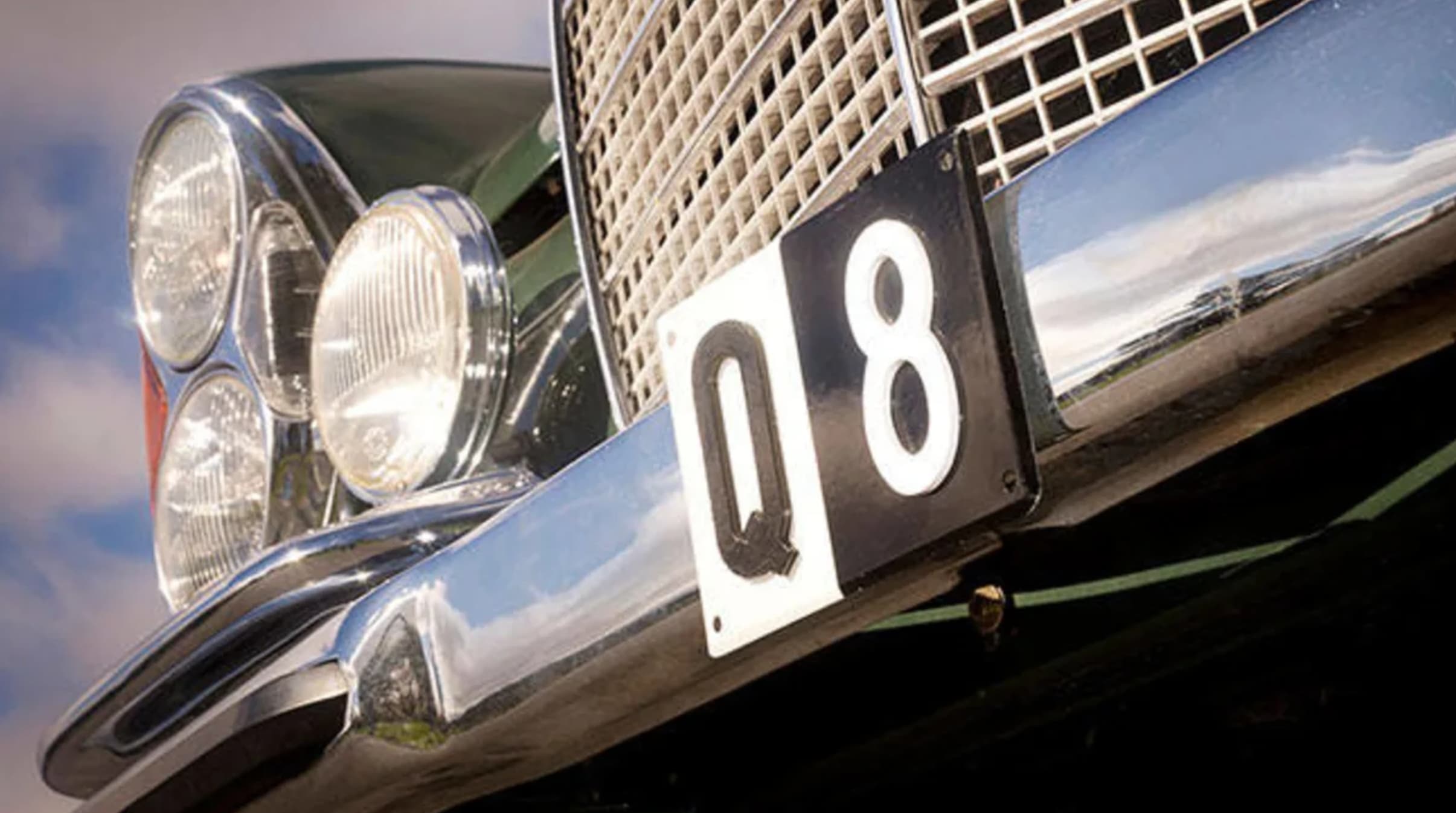
Heritage plates, retro plates, and plates with distinctive colour schemes can carry a premium over standard personalised plates. Victorian heritage plates (the original black-and-white numeric format) are a well-established collector category. WA's newly released Nostalgia series plates have nostalgia appeal. Euro-format plates suit European cars and carry a style premium in that community.
The visual appeal of the plate itself — how it looks on the car — plays a real role in what buyers will pay.
What doesn't affect value (as much as you'd think)
What you paid for it. This is the hardest truth for sellers. The $3,000 you paid the state government for your custom plate doesn't set a floor on its resale value. If the combination doesn't resonate with buyers, it might be worth less than what you paid. Value is driven by demand, not by cost.
How long you've had it. Owning a plate for 20 years doesn't make it more valuable than one bought last year (unless it's a heritage plate from an early series, where age genuinely matters).
Sentimental meaning. Your plate might mean the world to you — your initials, your wedding date, your childhood nickname. But if a buyer doesn't share that connection, it doesn't translate to market value. Plates with broad appeal (common names, universal words, car references) are worth more than plates with personal significance to one person.
How to get a valuation for your specific plate
General guides like this one can give you a ballpark, but every plate is different. For a specific estimate, you have a few options.
Free AI valuation tool
The AusPlates valuation tool analyses your plate combination against real Australian sales data. Enter your plate and state, and you'll get an estimated value range, a confidence rating, and an explanation of what's driving the estimate. It considers character count, word detection, number patterns, and comparable sales.
It's not perfect — no automated tool can account for every nuance of a market driven partly by emotion and personal taste. But it gives you a data-backed starting point that's more reliable than guesswork or forum opinions.
Check comparable sales
Look at what similar plates have sold for recently. Search dedicated plate marketplaces like AusPlates, MrPlates, and PlateSales to see what plates of similar length, style, and type are listed for. Keep in mind that asking prices aren't sale prices — plates often sell for 10–20% below the listed price after negotiation.
State government auction results (particularly VicRoads and Service NSW auctions) are also useful benchmarks, though these are for new releases rather than secondary market sales.
Ask in plate communities
Facebook groups dedicated to Australian number plates have active members who can give informed opinions on value. Just be aware that group members may have their own agenda — dealers might lowball to pick up a bargain, and enthusiasts might overestimate because they'd love to own your plate.
What to do once you know the value
If your plate is worth more than you expected, you have a decision to make. You can hold it — plates with desirable combinations have shown strong long-term appreciation, particularly heritage plates and short combinations. Or you can sell it and put the money to work elsewhere.
If you decide to sell, dedicated plate marketplaces will get your plate in front of the right buyers. AusPlates listings are currently free with no commission as part of our founding member offer — plates listed before 30 April 2026 are free for life. List your plate at ausplates.app/create.
For a detailed breakdown of every selling channel available, read our guide: Where to Sell Personalised Number Plates in Australia.
If your plate is worth less than you hoped, that's useful information too. It might mean holding onto it until the market moves, or it might confirm that the plate is worth more to you on your car than it would be to a stranger. Not every plate needs to be sold — some are just nice to have.
Frequently asked questions
Can I get a free number plate valuation? Yes. The AusPlates valuation tool is free to use — enter your plate combination and state, and get an instant AI-powered estimate based on real Australian market data.
How much is a 3-letter number plate worth? Three-letter plates in Australia typically range from $2,000 to $50,000+ depending on whether the letters form a recognisable word or name, the state of registration, and overall demand. Common initials or meaningful abbreviations (like "VIP" or "BMW") sit at the higher end.
How much is a 4-digit number plate worth? Four-digit numeric plates vary widely. Low four-digit numbers (1000–1999) are more desirable than higher ones. Heritage four-digit plates in Victoria can range from $2,000 to $20,000. Standard four-digit custom plates in other states typically sit between $500 and $5,000.
Are old number plates worth anything? Potentially, yes. Heritage plates — particularly early-series numeric plates from VIC, NSW, and SA — can be quite valuable. Single and double-digit heritage plates have sold for six figures. Even if your old plates aren't heritage series, they may have value if the combination is short or spells something desirable. Use the free valuation tool to check.
What is the most expensive number plate in Australia? NSW plate "1" sold for $12.4 million in 2024, making it the most expensive plate ever sold in Australia. For a full rundown, read our guide to the top 10 most expensive plates sold in Australia.
Does the state affect my plate's value? Yes. Victoria and NSW have the most active secondary markets with the highest prices. SA, QLD, and WA have growing markets. TAS, ACT, and NT have smaller buyer pools, which can make plates harder to sell but doesn't necessarily mean they're worth less — the right buyer just takes longer to find.